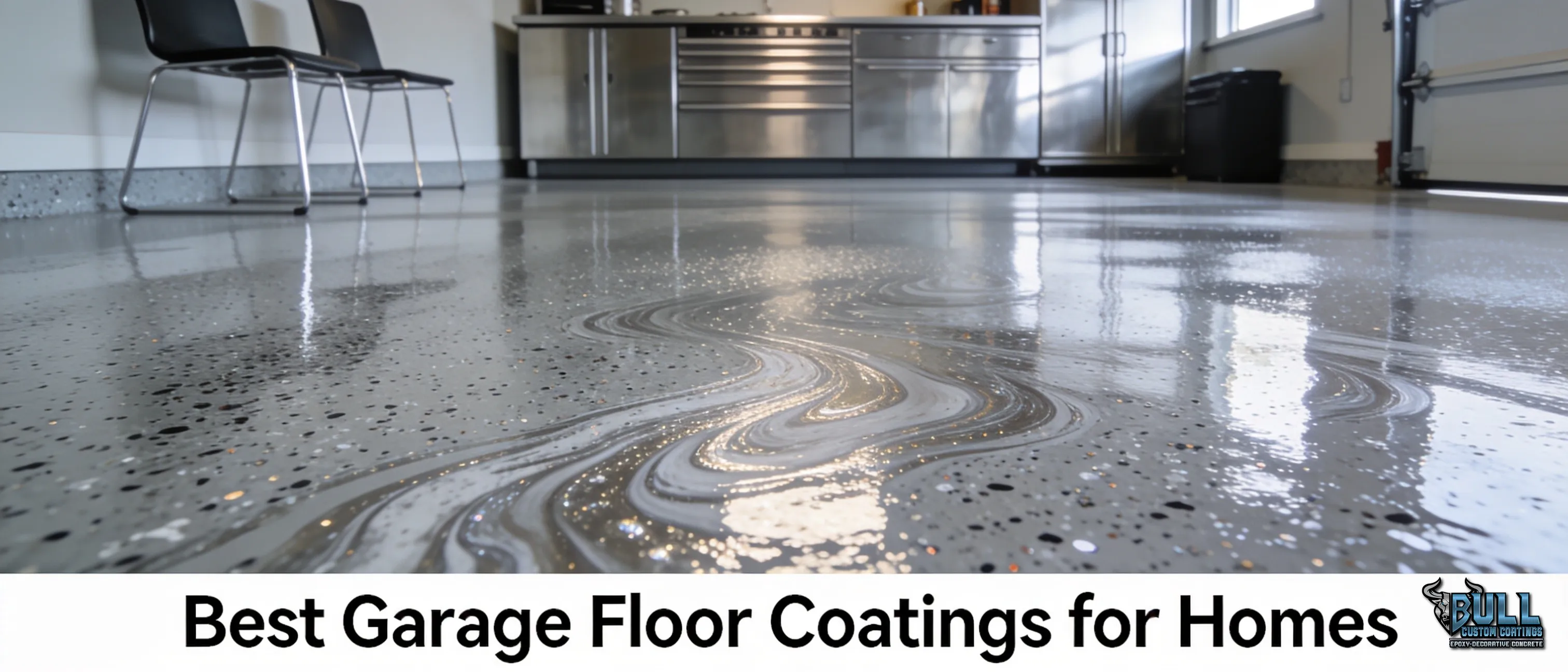
Best Garage Floor Coatings for Homes
Choosing the best garage floor coating for a home means weighing epoxy, polyaspartic, polyurea, polyurethane, and hybrid systems against how the space actually gets used. Each option protects concrete against vehicle traffic, oil drips, road salt, heavy tools, and temperature swings, but they differ in cure time, chemical resistance, and long-term durability. Bull Custom Coatings, serving Pennsylvania, New Jersey, and Delaware, pairs professional surface preparation and crack repair with premium coating systems engineered for lasting performance.
Key Takeaways
Epoxy, polyaspartic, polyurea, polyurethane, and garage floor paint are the main coating categories homeowners compare, and hybrid systems combine two of them in a single installation.
Epoxy delivers a thick, durable base coat and rich aesthetics at a moderate price point.
Polyaspartic cures faster than epoxy and resists UV yellowing, making it a strong topcoat or standalone system.
Polyurea offers the fastest cure times and the highest flexibility and abrasion resistance of the group, though it costs more upfront.
Hybrid epoxy-polyaspartic systems combine epoxy's build with polyaspartic's UV stability and scratch resistance for a best-of-both-worlds result.
Garage floor coatings protect concrete against oil drips, road salt, heavy tools, and temperature swings for 10 to 20 years when installed correctly.
Bull Custom Coatings installs high-quality epoxy, polyaspartic, and concrete coatings across Pennsylvania, New Jersey, and Delaware.
What Are the Main Types of Garage Floor Coatings?
The best garage floor coating depends on the demands of the space. A garage floor endures vehicle traffic, oil drips, road salt, heavy tools, and temperature swings — real-world conditions that make surface protection a practical necessity rather than a cosmetic upgrade.
Garage floor coatings generally fall into five categories:
Garage floor paint — A one-part acrylic formula that adds basic chemical and stain resistance. It improves appearance but ranks as the lowest-performing option among professional coating systems.
Epoxy coatings — Industrial-grade systems that bond directly to concrete, delivering significantly stronger adhesion and durability than acrylic paint, along with a wide range of color and flake options.
Polyaspartic coatings — A premium-tier solution offering fast cure times, UV stability, and exceptional resistance to abrasion and chemicals.
Polyurea coatings — A flexible, fast-curing system known for strong impact resistance and the ability to handle temperature swings without cracking.
Polyurethane coatings — Typically used as a protective topcoat layered over epoxy, adding extra scratch and chemical resistance without replacing the base system.
Hybrid systems — An epoxy base coat paired with a polyaspartic or polyurethane topcoat, combining epoxy's build and adhesion with a topcoat's UV stability and faster return to service.
How Does Epoxy Perform on Garage Floors?
Epoxy remains one of the most popular residential choices because it builds a thick, durable base layer with strong adhesion to concrete. It handles daily vehicle traffic and typical garage use well, and its broad range of colors and decorative flake blends make it easy to match any space. The tradeoff is a longer cure time — typically 24 to 72 hours before the floor is ready for use — and a tendency to yellow with prolonged UV exposure unless a UV-stable topcoat is added.
How Does Polyaspartic Perform on Garage Floors?
Polyaspartic coatings cure far faster than epoxy — often in as little as one hour between coats — and resist UV yellowing, making them well-suited for garages with natural light exposure. Clients who want a high-gloss, long-lasting finish typically find polyaspartic systems outperform standard epoxy over time, particularly when used as the topcoat in a layered system.
How Does Polyurea Perform on Garage Floors?
Polyurea coatings cure quickly and stay flexible even through temperature swings, which helps them resist cracking in garages exposed to hot tires and cold winters alike. They also hold up well against impacts and heavy abrasion, making them a strong fit for garages that double as workshops. Polyurea typically costs more than epoxy or polyaspartic, which is why it is often reserved for garages with especially demanding use.
What Are Hybrid Epoxy-Polyaspartic Systems?
A hybrid system layers an epoxy base coat with a polyaspartic or polyurethane topcoat, giving a garage floor the thickness and adhesion of epoxy along with the UV stability, faster cure time, and superior scratch resistance of the topcoat. Skipping the right topcoat sacrifices long-term durability, which is why many professionally installed residential systems are hybrids rather than a single product.
Is Garage Floor Paint Ever a Good Choice?
Garage floor paint suits low-budget, low-traffic situations. However, floors exposed to vehicle traffic or chemical spills quickly outpace what acrylic paint can handle, leaving the concrete vulnerable to staining and deterioration. Homeowners planning to park a car or run power tools in the space are better served by epoxy, polyaspartic, or a hybrid system.
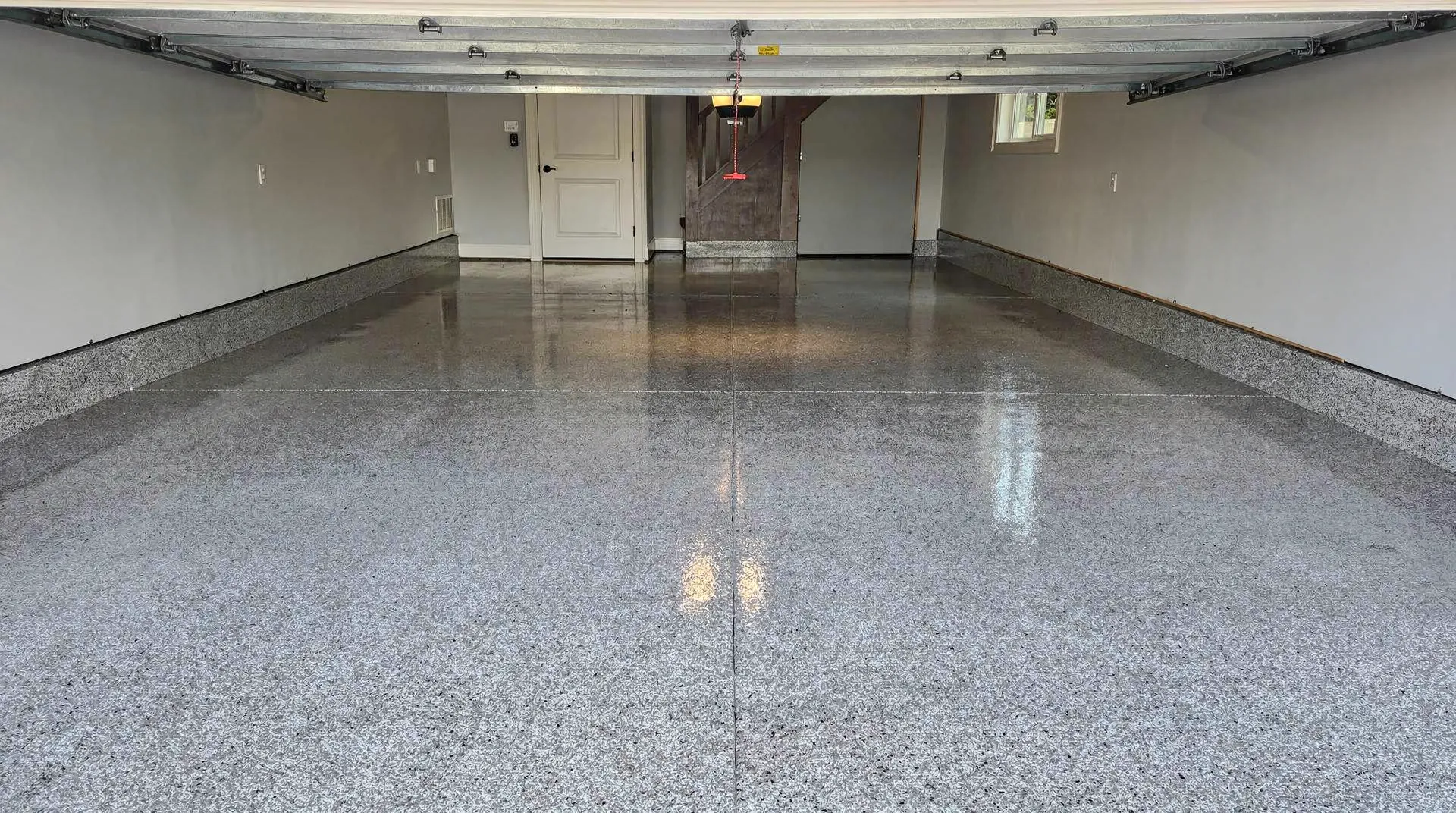
How Do Epoxy, Polyaspartic, and Polyurea Compare for Home Garages?
No single coating wins on every measure — the right choice depends on which tradeoffs matter most for a given garage. Epoxy delivers proven durability and rich aesthetics at a moderate price. Polyaspartic cures faster and resists UV yellowing. Polyurea adds flexibility and top-tier abrasion resistance at a higher cost.
Here is how the main options compare at a glance:
Feature | Garage Floor Paint | Epoxy | Polyaspartic | Polyurea |
|---|---|---|---|---|
Cure Time | Fast | 24–72 hours | As little as 1 hour | Fast |
UV Stability | Limited | Can yellow over time | Excellent | Excellent |
Chemical Resistance | Limited | Strong | Outstanding | Outstanding |
Abrasion Resistance | Minimal | Strong | Superior | Superior |
Typical Cost | Lowest | Moderate | Higher | Highest |
Expected Lifespan | Short-term | 10–20 years | 10–20 years | 10–20+ years |
Which Coating Lasts Longest?
Epoxy, polyaspartic, and polyurea systems typically deliver a lifespan ranging from 10 to 20 years when installed by a professional. That kind of longevity represents serious long-term value for any property owner, and it is why garage floor paint — which wears out far sooner — is rarely the right choice for a garage in regular use.
Which Coating Cures Fastest?
Polyaspartic and polyurea both cure dramatically faster than epoxy, in some cases in as little as an hour between coats compared to epoxy's 24- to 72-hour cure window. Homeowners who need the garage back in service quickly often choose polyaspartic or polyurea, or a hybrid system that pairs epoxy's base with a fast-curing topcoat.
How Do You Choose the Right Garage Floor Coating for Your Home?
Choosing the best garage floor coating starts with evaluating three core factors: durability, aesthetics, and long-term performance. Skipping that evaluation leaves homeowners with a surface that fails early — and a floor that costs more to fix than it would have cost to coat correctly the first time.
The right coating depends on how the space gets used. A garage doubling as a home gym or showroom has different needs than one that sees daily vehicle traffic and power tools.
Key factors to weigh before selecting a coating:
Durability — resistance to vehicle traffic, chemicals, and abrasion
Aesthetics — color, finish, and decorative options that match the space
Long-term performance — how the coating holds up over years, not just weeks
Curing time — epoxy typically requires 24 to 72 hours before the surface is ready for use, while polyaspartic and polyurea can return to service much faster
Budget — garage floor paint costs least upfront, while polyurea and hybrid systems cost more but deliver longer service life
Does Professional Installation Really Make a Difference?
Meticulous surface preparation and honest communication are what separate a coating that lasts from one that peels within a season. Bull Custom Coatings builds every project on those two principles — including crack repair, grinding, and overlays where needed — delivering results that elevate the space rather than just cover it. That preparation work is what allows any coating, whether epoxy, polyaspartic, or polyurea, to bond properly and perform over the long term.
Which Coating System Is Right for a Home Garage?
For most residential garages, a hybrid epoxy base with a polyaspartic topcoat offers the best balance of durability, appearance, and value. Garages with heavier abrasion or frequent temperature swings may benefit from polyurea, while budget-conscious, low-traffic spaces can still get solid results from a quality epoxy system. Bull Custom Coatings serves both homeowners and commercial property owners throughout Pennsylvania, New Jersey, and Delaware with full-service concrete coating solutions tailored to each surface.
Frequently Asked Questions
What is the best garage floor coating for a home?
For most homeowners, a hybrid system pairing an epoxy base coat with a polyaspartic topcoat offers the best combination of durability, appearance, and value. The right answer still depends on budget, how the garage gets used, and how quickly the floor needs to return to service.
What is the difference between epoxy and polyaspartic garage floor coatings?
Epoxy builds a thick, durable base layer but takes 24 to 72 hours to cure and can yellow with UV exposure. Polyaspartic cures in as little as an hour, resists UV yellowing, and is often used as a topcoat over epoxy to combine the strengths of both.
Is polyurea better than epoxy for garage floors?
Polyurea offers faster cure times, more flexibility, and stronger abrasion resistance than epoxy, making it a good fit for garages with heavy use or frequent temperature swings. Epoxy remains a strong, more budget-friendly choice for typical residential garages.
How long does a garage floor coating last?
Professionally installed epoxy, polyaspartic, and polyurea coatings typically last 10 to 20 years. Garage floor paint has a much shorter service life and is best suited to low-traffic, low-budget situations.
Does Bull Custom Coatings serve my area?
Bull Custom Coatings installs epoxy, polyaspartic, and polyurea garage floor coating systems for homeowners and businesses across Pennsylvania, New Jersey, and Delaware, backed by professional surface preparation and crack repair on every project.
Selecting the right garage floor coating ranks among the more consequential decisions a homeowner makes for a space that absorbs daily wear, chemical exposure, and shifting temperatures. Weighing surface preparation quality, coating chemistry, and long-term performance against actual usage demands leads to a floor that holds its integrity for years. A professionally applied epoxy, polyaspartic, or polyurea system — installed with genuine craftsmanship and attention to substrate conditions — delivers value that far exceeds the initial investment.
Bull Custom Coatings installs high-quality epoxy, polyaspartic, and concrete coatings across Pennsylvania, New Jersey, and Delaware — reach the team at (215) 436-4377 or [email protected] for a free estimate.